Sauna Blankets and Heart Conditions - What the Research Actually Says
If you have a heart condition, or even just a family history of cardiovascular disease, the question of whether a sauna blanket is safe for you is not one to answer casually. I've spent considerable time reviewing the clinical literature on infrared heat therapy and cardiovascular health, and the picture is genuinely nuanced. There are real, documented benefits for many people with cardiac concerns - and there are equally real contraindications that require a conversation with your cardiologist before you ever step inside one of these devices.
This guide is intended to give you the full picture, grounded in published research, so you can have an informed conversation with your physician rather than guessing.
How Infrared Heat Changes What Your Heart Is Doing
When you lie inside a sauna blanket, your core body temperature begins to rise. The physiological response to that heat stress is immediate and measurable. Your autonomic nervous system triggers peripheral vasodilation - blood vessels near the skin surface widen to help dissipate heat. Your heart rate climbs, typically by 30 to 50 percent from baseline during a standard session. Your cardiac output increases substantially as your body works to circulate blood toward the skin for cooling.
Blood pressure response is more variable and depends heavily on individual baseline health. In most healthy adults, systolic blood pressure may rise slightly at the start of a session and then fall below baseline as vasodilation takes hold. This post-session hypotension is actually one mechanism researchers believe contributes to long-term cardiovascular benefit. However, in people with poorly controlled hypertension or certain forms of heart disease, these same hemodynamic shifts can become problematic rather than therapeutic.
The body's response to infrared heat from a sauna blanket is physiologically similar to moderate aerobic exercise in several important ways. Your metabolic rate climbs. Sweat rate increases substantially, creating fluid and electrolyte losses. Norepinephrine levels rise. For most people, this represents a beneficial hormetic stress. For people with specific cardiac vulnerabilities, it warrants careful evaluation.
The Landmark Finnish Study on Sauna Use and Cardiovascular Mortality
The most frequently cited evidence in this space comes from a 2015 prospective cohort study by Laukkanen et al., published in JAMA Internal Medicine. This study followed 2,315 middle-aged Finnish men over a median of 20 years, tracking sauna use frequency against cardiovascular outcomes.
The findings were striking. Compared to men who used a sauna once per week, those who used it four to seven times per week had a 63 percent lower risk of sudden cardiac death, a 48 percent lower risk of fatal coronary heart disease, and a 50 percent lower risk of fatal cardiovascular disease. These associations held after adjustment for conventional risk factors including age, body mass index, smoking, and physical activity levels.
You can read the full study here: Laukkanen JA et al., JAMA Intern Med. 2015;175(4):542-548
The researchers proposed several mechanisms: improved endothelial function, reduced arterial stiffness, lower systemic inflammation, and favorable changes in autonomic nervous system tone. Subsequent work from the same Finnish research group has replicated and extended these findings across mixed-sex populations.
It is worth noting that these studies examined traditional Finnish saunas operating at temperatures between 80 and 100 degrees Celsius. Most sauna blankets operate in a far-infrared range that heats the body somewhat differently and at lower ambient temperatures - typically 45 to 65 degrees Celsius. The physiological responses overlap substantially, but they are not identical, and we do not yet have long-term prospective data specifically on sauna blanket use and cardiovascular outcomes. The mechanistic overlap, however, gives researchers reasonable grounds for cautious optimism.
Specific Heart Conditions Where Sauna Blankets Carry Real Risk
The cardiovascular benefits documented in healthy and low-risk populations do not automatically extend to everyone with a cardiac diagnosis. Several specific conditions warrant either firm avoidance or very careful medical supervision.
Uncontrolled hypertension - If your blood pressure is not well-managed on your current regimen, the hemodynamic shifts induced by heat stress can be unpredictable and potentially dangerous. The initial sympathetic activation of heat exposure may spike blood pressure before vasodilation takes over. Until your hypertension is well-controlled and your physician has assessed your individual response, sauna blankets should be avoided.
Recent myocardial infarction - The period following a heart attack involves substantial myocardial vulnerability. Cardiac rehabilitation guidelines generally recommend against vigorous heat exposure during the early recovery phase. Most cardiologists advise waiting a minimum of several weeks after an uncomplicated MI, and longer after complicated presentations, before considering any form of sauna therapy. This timeline must be determined by your treating physician.
Severe heart failure - This is an area where the research is genuinely divided. Some small trials, particularly from Japan using Waon therapy (a form of far-infrared sauna treatment), have shown potential benefit in stable, mild-to-moderate heart failure under supervised conditions. However, severe heart failure with reduced ejection fraction involves a heart that is already working at maximum compensatory capacity. The increased cardiac demand of heat stress may exceed what a severely compromised heart can safely accommodate. Any consideration of sauna use with a heart failure diagnosis requires explicit clearance from a heart failure specialist.
Significant arrhythmias - Conditions including atrial fibrillation with poor rate control, ventricular tachycardia, or arrhythmias associated with structural heart disease can be provoked by the adrenergic stimulation and electrolyte shifts that accompany heat stress and sweating. If you have a known arrhythmia, your cardiologist needs to evaluate your specific rhythm disorder before you use any form of sauna therapy.
Medication Interactions You Need to Know About
The medications many cardiac patients take daily can interact meaningfully with heat stress and the physiological changes it produces.
Beta-blockers - These medications blunt the heart rate response to sympathetic stimulation. A person on a beta-blocker will not experience the same degree of heart rate elevation in a sauna blanket as someone who is medication-free. This sounds protective, but it also means the normal cardiovascular warning signals - feeling your heart pounding, feeling overheated - may be partially suppressed. Patients on beta-blockers need to rely more heavily on objective temperature monitoring and time limits rather than subjective sensation during sauna sessions.
Diuretics - Many people with hypertension or heart failure take diuretics, which already reduce fluid volume. Combining diuretic therapy with substantial sweat losses from a sauna blanket session creates meaningful dehydration risk. Electrolyte imbalances resulting from this combination can destabilize blood pressure and, in susceptible individuals, trigger arrhythmias. Aggressive pre-hydration and electrolyte monitoring are essential if your physician clears you to use a sauna blanket while on diuretic therapy.
Anticoagulants - Warfarin, apixaban, rivaroxaban, and similar blood thinners are commonly prescribed after certain cardiac events and procedures. While heat therapy does not directly antagonize anticoagulation, the circulatory changes and any risk of falls or injury (from heat-related dizziness) carry amplified consequences in anticoagulated patients. Discuss session protocols, including how to exit the blanket safely, with your prescribing physician.
Antihypertensive medications broadly - Multiple classes of blood pressure medications amplify the post-sauna hypotensive effect. Standing up too quickly after a session while on antihypertensives can cause orthostatic hypotension significant enough to result in fainting. Transitioning slowly from lying to sitting to standing after any sauna blanket session is a basic safety measure that becomes especially important for people on blood pressure medications.
When to See Your Doctor Before Trying a Sauna Blanket
The answer is straightforward: if you have any existing cardiovascular diagnosis, any cardiac risk factor that your physician is actively managing, or any history of cardiac events, you need explicit medical clearance before using a sauna blanket. This is not a formality. The physiological stresses involved are real enough that the conversation matters.
Bring your physician the specific product you are considering, including its temperature range and session duration recommendations. Ask specifically about your current medications and any interaction risks. Ask whether your current level of cardiac control - blood pressure, heart rate, arrhythmia burden - is stable enough to tolerate heat stress. Ask what symptoms should prompt you to stop a session immediately.
If you are in an active phase of cardiac rehabilitation following an event or procedure, your cardiac rehabilitation team is an excellent resource for supervised introduction to heat therapy at appropriate intensity levels.
Safe Protocol Considerations for Cardiac Patients Who Have Medical Clearance
For individuals who have received explicit clearance from their cardiologist, the general principle is to start far more conservatively than the product instructions suggest and progress gradually.
Start with temperatures at the lower end of the device's range - typically around 40 to 45 degrees Celsius - and limit initial sessions to 10 to 15 minutes. Keep a glass of water nearby and drink before, during, and after the session. Never use a sauna blanket alone during your first several sessions. Have someone present or check in on you regularly.
Rise slowly from the blanket. Sit up first, wait 30 to 60 seconds, then stand. If you feel dizzy, lightheaded, or notice any chest discomfort, palpitations, or unusual shortness of breath, end the session immediately and contact your physician.
For cardiac patients specifically, a far-infrared sauna blanket with the lowest possible electromagnetic field output is a reasonable preference, since there is no reason to introduce additional physiological variables beyond heat stress itself during medically supervised sessions.

Best for Cardiac Patients Seeking Minimal EMF Stress
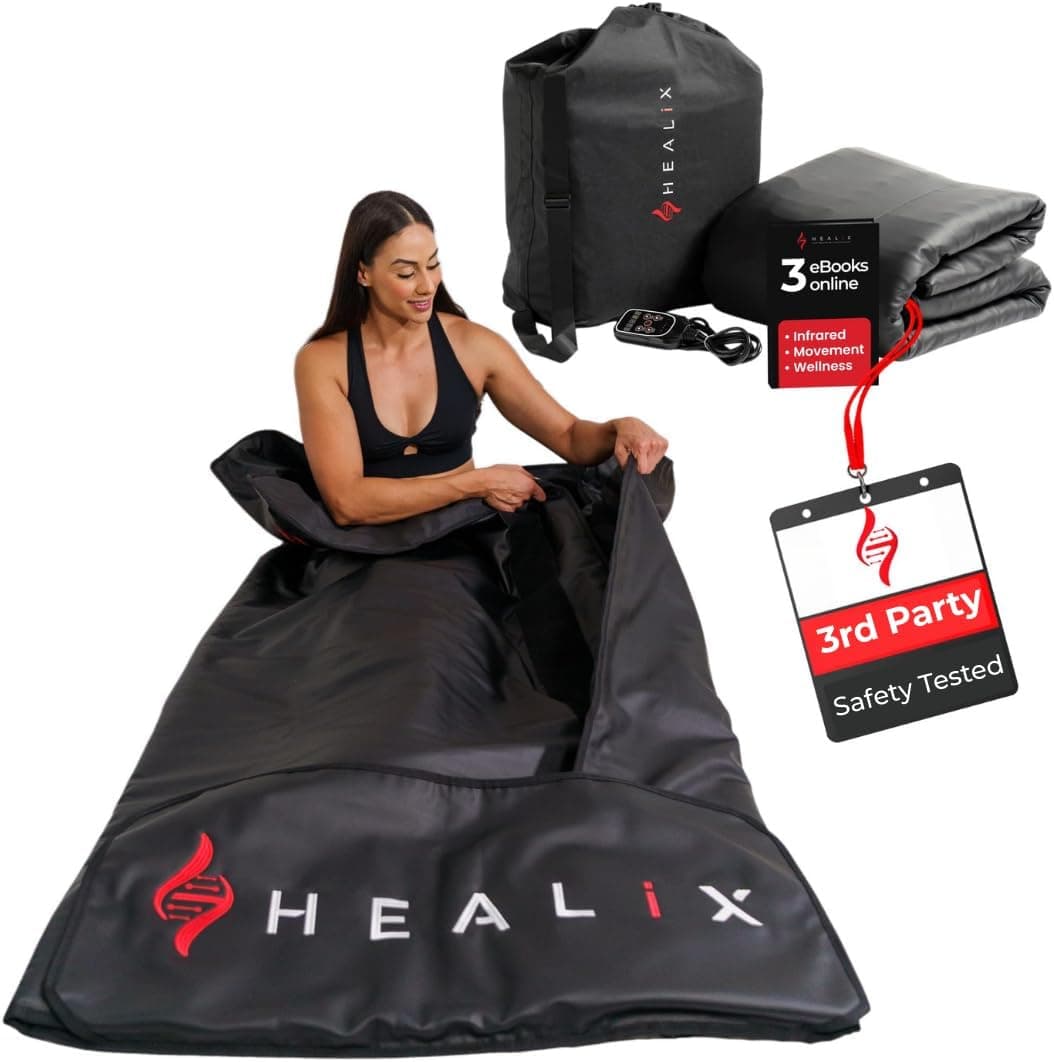
Healix Zero EMF Sauna Blanket
The only verified zero EMF sauna blanket on the market - an important consideration when your physician wants to minimize all non-thermal physiological variables during medically supervised heat therapy sessions.
Starting Gently - Why Lower Temperature Options Matter for New Users With Cardiac History
For people with cardiovascular concerns who have received medical clearance to explore sauna blanket therapy, the ability to start at genuinely low temperatures and progress incrementally is important. Not every sauna blanket on the market offers fine-grained temperature control at the lower end of the range. When I've evaluated products for cardiac-appropriate use, models that allow stable, accurate heating starting around 40 degrees Celsius give users and their healthcare providers much more flexibility in designing a safe introductory protocol.
Starting conservatively also builds useful data about your individual response - what happens to your heart rate, how you feel during and after the session, whether you experience any post-session dizziness - before progressing to longer or warmer sessions. This incremental approach mirrors how cardiac rehabilitation programs introduce exercise stress.

Best for Gentle, Low-Temperature Introduction
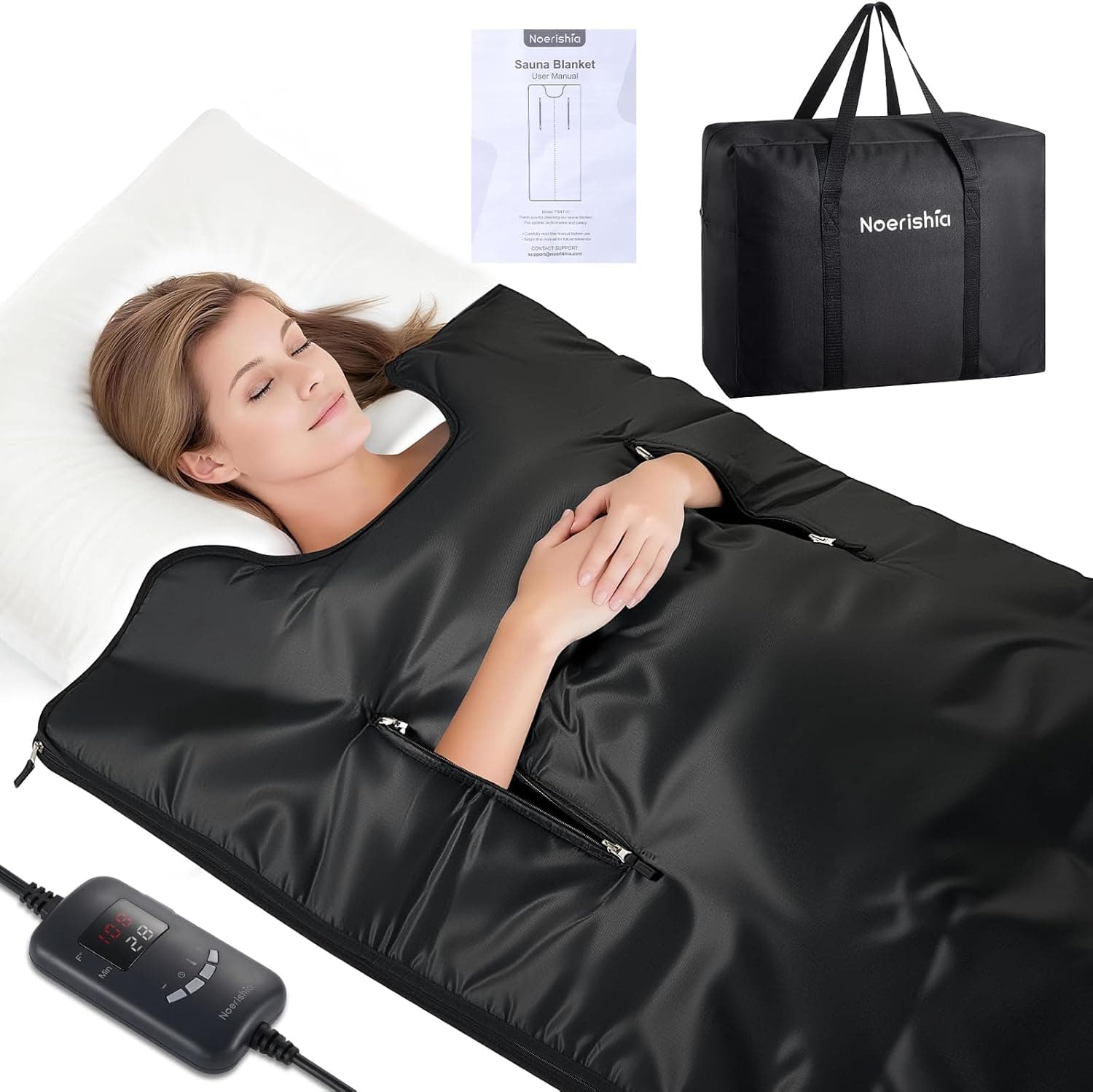
Noerishia Portable Sauna Blanket
Best value under $100 with accessible starting temperatures and machine washable design - a practical choice for cardiac patients beginning a physician-supervised introductory protocol at conservative heat levels.
The Bottom Line on Sauna Blankets and Heart Health
The cardiovascular research on regular sauna use is genuinely encouraging. The Laukkanen 2015 data showing dramatically reduced cardiovascular mortality with frequent sauna use represents some of the strongest epidemiological evidence we have for a lifestyle intervention. The mechanistic research on improved endothelial function, reduced arterial stiffness, and favorable autonomic changes provides biological plausibility for those population-level findings.
But that evidence exists alongside equally clear contraindications for specific high-risk cardiac conditions, meaningful medication interactions that can amplify risk, and a total absence of long-term safety data in people with active, unstable cardiac disease.
If your heart is healthy or your risk factors are well-controlled and your physician has cleared you, regular sauna blanket use is a practice with a legitimate evidence base behind it. If you have a significant cardiac history or active cardiac condition, the right starting point is your cardiologist's office - not a product page. That conversation could make the difference between a therapy that genuinely supports your cardiovascular health over time and one that creates risk you did not need to take.
This content is provided for informational purposes and does not constitute medical advice. Always consult a qualified healthcare provider before beginning any new health practice, particularly if you have a diagnosed cardiovascular condition.