Sauna Blanket and Blood Pressure - What the Research Actually Shows
The question of whether a sauna blanket can lower blood pressure is one of the few in this category where the evidence base is unusually substantive and also unusually nuanced. Traditional sauna has been studied for decades in large prospective cohorts with hard cardiovascular outcomes. Infrared sauna has a smaller but growing evidence base. Sauna blankets specifically sit at the frontier of that research, with the first rigorous acute-response study published in 2025 and almost no long-term trials yet. What I can tell you, drawn from reviewing the full literature and from tracking my own blood pressure for three years of regular blanket use, is that the picture is meaningfully positive for most users - with several important asterisks.
This article walks through the acute response (what happens to your blood pressure during and immediately after a session), the chronic adaptation evidence (what happens over weeks and months of regular use), the populations where the risk-benefit skews differently, and the practical protocol that reflects the strongest evidence we have.
The Acute Blood Pressure Response During a Session
When you start a sauna blanket session, the first physiological event is sympathetic nervous system activation in response to the rising core temperature. Your heart rate climbs. Systolic blood pressure rises, typically by 5 to 20 mmHg depending on baseline and session intensity. Peripheral vasodilation begins within the first several minutes as your body redirects blood flow to the skin to dissipate heat.
As vasodilation accelerates, total peripheral vascular resistance falls. This is the pivot point in the session where the blood pressure story gets interesting. In the 2012 Journal of Clinical Hypertension study on sauna and post-exercise sauna (PMC8108777), the authors documented a transitory hypotensive effect - a measurable drop in systolic pressure - at the second minute of sauna exposure, reflecting the dominance of vasodilation over sympathetic activation in most subjects. Over the course of the full session, the net effect is highly variable: some people show sustained systolic elevation, some show a rise-then-fall pattern, and some stay close to baseline throughout.
The diastolic story is simpler. Across multiple studies, diastolic pressure tends to be minimally responsive to heat exposure. If your systolic pressure swings by 15 mmHg in a session, your diastolic pressure probably moves by 2 to 5 mmHg. This is consistent across traditional sauna, infrared sauna, and the initial infrared sauna blanket data from the St. Mary's University 2025 acute-response study.
The 2025 St. Mary's work is worth reading because it is the first study to measure these responses specifically in infrared sauna blankets rather than in cabin saunas. The short version: systolic pressure and core temperature both rose measurably during 30 to 60 minute sessions, diastolic pressure did not change meaningfully, and the overall response profile paralleled moderate aerobic exercise. The authors explicitly positioned the blanket as a potential tool for inducing long-term cardiovascular adaptation through repeated exposure.
The Post-Session Hypotensive Window
One of the most consistent findings in the heat therapy literature is a period of reduced blood pressure in the 30 to 120 minutes following a session. Peripheral vasodilation persists after the acute heat stimulus ends. Cardiac output returns toward baseline. The net effect is a measurable reduction in systolic blood pressure that can last up to two hours.
For most healthy users, this post-session hypotension is mild and well-tolerated. It is, in fact, one of the proposed mechanisms by which regular sauna use produces long-term vascular benefit - repeated exposure to this low-resistance state may drive favorable remodeling over time. For a few populations, it warrants attention: people already on multiple blood pressure medications, people with low baseline blood pressure, and people prone to orthostatic symptoms can experience pronounced dizziness or near-syncope in this window. The fix is behavioral - exit the blanket slowly, lie flat for a minute, sit for a minute, then stand - and addresses almost all of these episodes.
The Chronic Blood Pressure Evidence - What Long-Term Use Actually Does
Here the evidence base is stronger and more clinically useful. The Kuopio Ischemic Heart Disease prospective cohort study (Zaccardi et al., 2017; PubMed 28633297) followed 1,621 middle-aged Finnish men without baseline hypertension for a median of 24.7 years. The headline finding: men who used sauna 2 to 3 times per week had a 24 percent lower risk of developing hypertension compared to once-weekly users, and men who used it 4 to 7 times per week had a 46 percent lower risk. The dose-response relationship was clean and persisted after adjustment for conventional cardiovascular risk factors.
Beever's 2010 clinical work on far-infrared sauna in 15 patients with type 2 diabetes (three sessions per week for three months) documented a 6.4 mmHg reduction in systolic blood pressure alongside improvements in stress and fatigue scores. The magnitude here is clinically meaningful - a 5 mmHg reduction in systolic pressure at the population level is associated with roughly a 10 percent reduction in cardiovascular events in long-term hypertension trials.
A 2025 Frontiers in Cardiovascular Medicine review consolidated the heat therapy literature across hypertension, heart failure, venous thromboembolism, and other cardiovascular outcomes, and concluded that heat therapy demonstrates improvement across the spectrum - with the strongest evidence for endothelial function improvement and the most consistent findings in mild-to-moderate hypertension.
The Exercise-Plus-Sauna Finding That Changes the Protocol
The single most important study for practical protocol design is the 2012 Journal of Clinical Hypertension trial on sauna alone versus sauna after exercise in 16 patients with untreated hypertension. The 24-hour ambulatory blood pressure monitoring results were striking. Sauna alone produced no statistically significant effect on 24-hour systolic blood pressure. Exercise followed by sauna produced a 5 mmHg drop in daytime systolic pressure (139 to 134 mmHg) and a 5 mmHg drop in 24-hour systolic pressure (136 to 131 mmHg), with a 3 mmHg drop in mean arterial pressure.
The practical implication is that for someone specifically targeting blood pressure reduction, the sequence matters. A moderate aerobic session followed by a sauna blanket appears to produce meaningful reductions that sauna alone does not produce in this population. This is not a finding that tells sedentary hypertensive patients to skip the blanket - it tells them that pairing the blanket with a walk, a bike ride, or a light resistance session immediately prior is a materially more effective protocol.
The Mechanisms That Explain the Chronic Effect
The endothelial nitric oxide synthase (eNOS) pathway is the best-characterized mechanism. Infrared radiation activates eNOS, increasing nitric oxide production in the vascular endothelium, which in turn relaxes vascular smooth muscle and improves endothelial function. Repeated exposure appears to upregulate eNOS expression over weeks to months, producing sustained improvements in vasoreactivity and lower basal vascular tone.
Secondary mechanisms likely contribute. Heat shock protein expression in the endothelium and cardiac tissue is upregulated by repeated heat exposure and is associated with improved tolerance to cardiovascular stress. Autonomic balance shifts in a parasympathetic-dominant direction over time in people who use heat therapy regularly. Arterial stiffness - measured by pulse wave velocity - is reduced in people who sauna frequently, independent of blood pressure change per se. All of these mechanisms contribute to the reductions in hypertension incidence seen in the Finnish cohorts.

Best for Consistent Long-Term Use
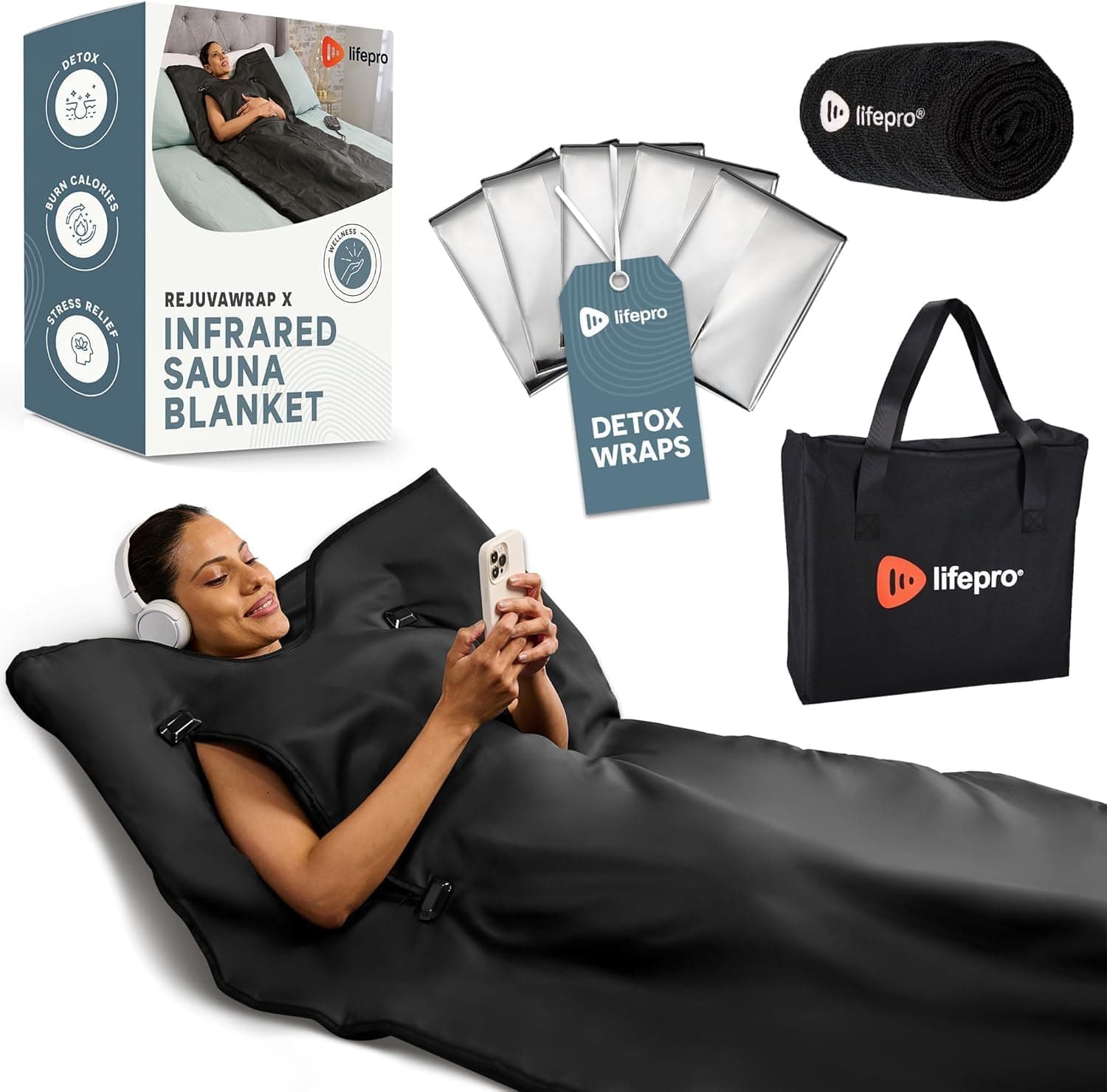
LifePro RejuvaWrap Sauna Blanket
The most-reviewed sauna blanket on Amazon with 1,500+ verified reviews. The arm-hole design lets you drink water and read during sessions, which matters a lot when your blood pressure protocol calls for 4-7 sessions a week for months. Wide temperature range (95-176 F) lets you start conservatively and progress.
Who Gets the Biggest Blood Pressure Benefit
Drawing across the literature, the populations with the largest expected benefit from regular sauna blanket use are: people with mild or borderline hypertension (untreated or on a single medication), people with prehypertensive readings (120-139 systolic), people with type 2 diabetes where hypertension is part of the metabolic picture, and generally healthy middle-aged adults with elevated cardiovascular risk who have cleared the contraindications list. The benefit is smaller but still present in well-controlled stage 2 hypertension on multiple medications.
The benefit is much less clear in isolated diastolic hypertension, which is less responsive to heat therapy. And the benefit is essentially absent (or net negative) in the contraindicated populations covered below.
Populations Where the Risk Profile Changes
Heat exposure is not universally safe for everyone with a blood pressure diagnosis. A few specific presentations warrant caution or explicit medical clearance.
Uncontrolled severe hypertension - If resting systolic is above 180 mmHg or diastolic is above 110 mmHg, the acute sympathetic activation of a sauna session can produce transient spikes that are clinically meaningful. This is an "optimize your medication first" situation, not a "start using a blanket" situation.
People on aggressive antihypertensive regimens - Two or more blood pressure medications, especially combinations including diuretics and beta-blockers, amplify the post-session hypotensive response. Standing up from a blanket too quickly can produce symptomatic orthostasis. The exit protocol matters more in this population.
Orthostatic hypotension at baseline - If you already experience lightheadedness on standing, layering sauna-induced vasodilation on top of the underlying condition can provoke symptomatic drops. Start with shorter, cooler sessions and progress slowly if at all.
Recent cardiovascular events - Within several weeks of a myocardial infarction, a cardiac procedure, or initiation of a new cardiovascular medication regimen, the blood pressure response to heat is less predictable. Wait for your cardiologist's all-clear.
The Protocol That Reflects the Evidence
If your goal is specifically blood pressure reduction, here is the protocol that best matches the strongest studies. Use the blanket 3 to 5 times per week, as consistently as you can sustain for at least 8 to 12 weeks. Pair sessions with a moderate aerobic effort (a 20 to 30 minute walk, bike ride, or light resistance session) immediately before the blanket, based on the 2012 exercise-plus-sauna data. Session duration of 30 to 45 minutes at 55 to 65 degrees Celsius is supported by the effective study protocols. Hydrate adequately before, during, and after.
Track your blood pressure at the same time each day (morning, before your first coffee, after emptying your bladder, seated with your back supported for five minutes). Log readings weekly. Expect measurable changes at the 4 to 6 week mark in most responders, with maximal effect closer to 12 weeks. If you see no change by eight weeks of consistent use, the intervention is probably not going to move your pressure in a clinically meaningful way for your particular physiology, and adjusting other variables (exercise dose, sodium intake, weight, sleep) is likely higher-yield.
What the Evidence Does Not Yet Support
There are several claims in the popular literature about sauna blankets and blood pressure that the research does not currently support. Dramatic acute reductions in hypertension are not realistic - you cannot use a blanket and expect your 150/95 to be 120/80 an hour later and stay there. Replacement of prescribed medication is not supported and should not be attempted without physician guidance. Reductions larger than 8 to 10 mmHg systolic at the individual level are possible but unusual. And the diastolic pressure improvements, where they occur, tend to be modest.
What the evidence does support is a meaningful, cumulative benefit from regular use over months - a benefit that stacks with other lifestyle interventions and can reduce cardiovascular risk in conjunction with, not instead of, the rest of a blood pressure management plan.

Best for Medically Supervised Use
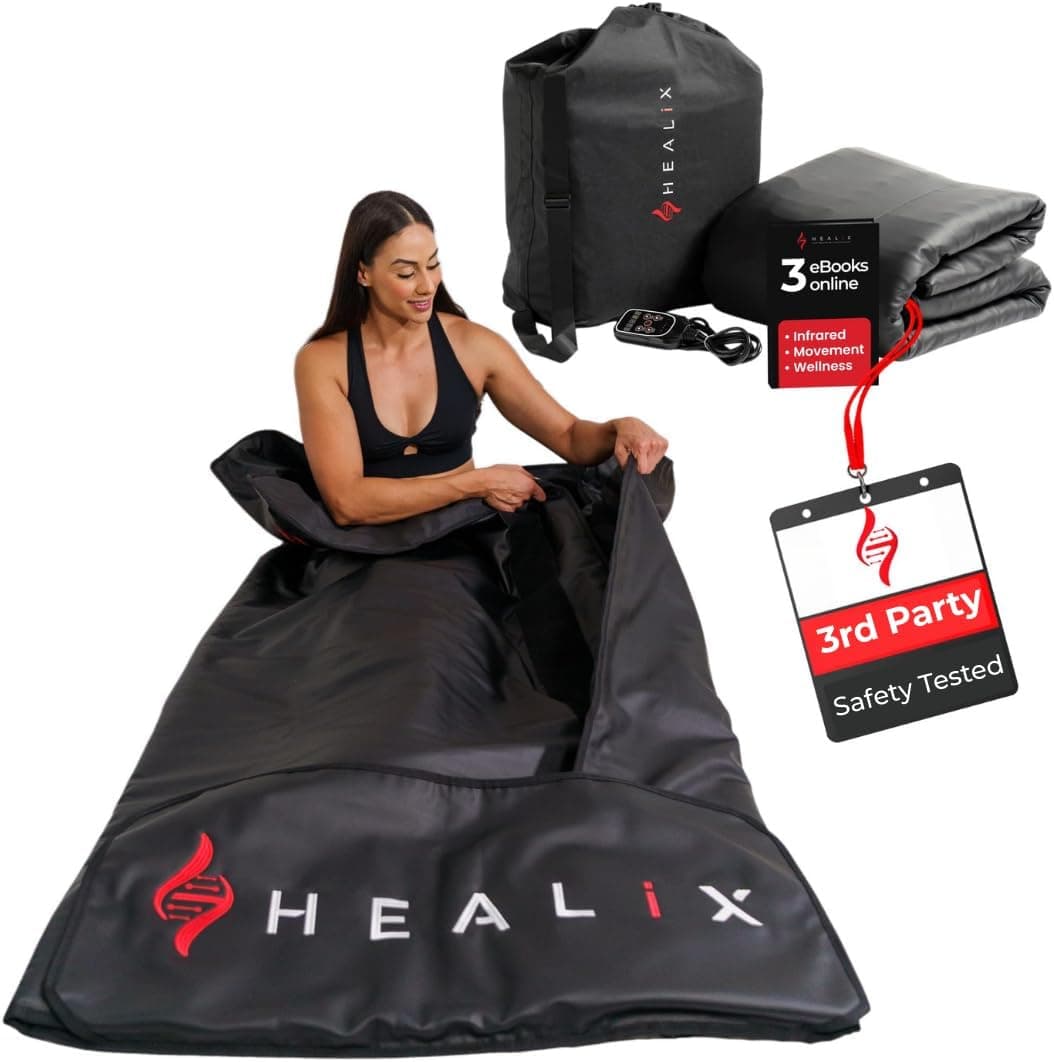
Healix Zero EMF Sauna Blanket
If you are using the blanket as part of a blood pressure management plan and want to minimize every non-thermal physiological variable, this is the unit I recommend. Zero-EMF build, accurate temperature control at the low-middle end of the range where most clinical protocols sit, and reliable session-to-session consistency.
How to Interpret Your Own Blood Pressure Response
If you decide to use a sauna blanket as part of a blood pressure protocol, the way you track the data matters as much as the protocol itself. Measure at a consistent time of day, seated with feet flat, after five minutes of rest, using a validated upper-arm cuff. Take three readings a minute apart and record the average. Do this daily for a two-week baseline before you start blanket sessions so you have a real comparator.
Once you begin, take your measurement at the same consistent time each day - crucially, not immediately after a session, since the post-session hypotensive window will artificially depress your readings and is not what you are trying to track. The question is whether your basal blood pressure is changing over weeks. Log sessions (time, temperature, duration) alongside readings. The pattern you are looking for is a gradual downward trend in baseline systolic over 4 to 12 weeks, not a dramatic immediate change.
The Bottom Line on Sauna Blankets and Blood Pressure
The strongest evidence we have - from the Finnish prospective cohort data on sauna frequency and hypertension incidence, from the controlled trials in diabetic and hypertensive populations, and from the mechanism-level work on endothelial nitric oxide pathways - supports the claim that regular sauna blanket use can produce a clinically meaningful reduction in blood pressure over months of consistent practice. The effect is modest in size (typically 4 to 8 mmHg systolic in responders), larger when paired with exercise, and absent in about a third of users in controlled trials. Diastolic pressure is less responsive than systolic.
The practical play is straightforward. If you have mild or moderate hypertension and no contraindications, adding 3 to 5 weekly blanket sessions to an otherwise solid blood pressure management plan is a reasonable, evidence-supported intervention. Pair it with exercise, monitor your readings carefully, and give it 8 to 12 weeks before judging effectiveness. If you have severe uncontrolled hypertension, a complex cardiac history, or are on multiple blood pressure medications, the conversation belongs with your physician before you buy a blanket.
References
- Zaccardi F et al. Sauna Bathing and Incident Hypertension - A Prospective Cohort Study. Am J Hypertens. 2017. PubMed 28633297
- Gayda M et al. Effects of Sauna Alone and Postexercise Sauna Baths on Blood Pressure. J Clin Hypertens. 2012. PMC8108777
- Beever R. Far-infrared saunas for treatment of cardiovascular risk factors. Can Fam Physician. 2010. PubMed 20064006
- Laukkanen T et al. Association Between Sauna Bathing and Fatal Cardiovascular Events. JAMA Intern Med. 2015. PubMed 25705824
- Hoekstra A et al. Acute Physiological Responses to an Infrared Sauna Blanket. St. Mary's University, 2025. Digital Commons
- Heat therapy and cardiovascular outcomes review. Front Cardiovasc Med. 2025. Frontiers
Related Reading
- Sauna Blankets and Heart Conditions
- Sauna Blanket Side Effects - Complete Risk Analysis
- 7 Science-Backed Benefits of Sauna Blankets
- How to Use a Sauna Blanket Safely
This content is informational only and does not constitute medical advice. Do not change your blood pressure medication regimen without physician guidance.