Sauna Blanket Temperature Guide - Optimal Settings by Goal
The temperature you run your sauna blanket at is one of the most consequential session variables, and one of the least discussed. Users default to either "the highest setting because more is better" or "a comfortable middle without thinking about it," and both approaches leave substantial effect on the table. The optimal temperature depends on what you are actually trying to accomplish - cardiovascular adaptation, sleep, recovery, acclimation, relaxation, or pain management all have somewhat different ideal ranges. This article is the goal-specific temperature guide based on the research protocols and practical experience.
The Temperature Ranges That Matter
Most quality sauna blankets cover a range from approximately 35 to 80 degrees Celsius (95 to 176 degrees Fahrenheit). Within this range, the behaviorally meaningful segments are:
Low (35-50 degrees Celsius / 95-122 degrees Fahrenheit): Gentle warmth. Minimal sweating. Useful for acclimation, muscle relaxation without significant cardiovascular load, or users with heat sensitivity.
Mid-low (50-60 degrees Celsius / 122-140 degrees Fahrenheit): Moderate heat. Noticeable sweating begins. Comfortable for most users. The range most clinical research protocols use for cardiovascular and wellness endpoints.
Mid-high (60-70 degrees Celsius / 140-158 degrees Fahrenheit): Substantial heat. Heavy sweating. Core temperature rise is significant. Most "performance" protocols (heat acclimation, cardiovascular conditioning) sit here.
High (70-80 degrees Celsius / 158-176 degrees Fahrenheit): Intense heat. Some users find this uncomfortable. Maximum thermoregulatory stress. Appropriate for short durations or for experienced users with specific goals.
By Goal - The Recommended Temperatures
Cardiovascular adaptation and blood pressure: 55 to 65 degrees Celsius. This matches the ranges used in the Beever diabetes trial, the Masuda cardiovascular endothelial function studies, and the 2012 Gayda exercise-plus-sauna trial. Duration 30 to 45 minutes, 3 to 5 times per week.
Sleep improvement: 55 to 65 degrees Celsius, evening sessions ending 90 to 120 minutes before bed. Higher temperatures leave residual heat that interferes with sleep onset. The goal is a clean post-session core temperature drop that aligns with bedtime.
Heat acclimation for athletic events: Target core temperature rise of approximately 1.5 degrees Celsius, which typically requires 60 to 65 degrees Celsius blanket temperature for 45 to 60 minutes. Run daily for 10 to 14 days before the event.
Post-workout recovery: 55 to 65 degrees Celsius for 30 to 45 minutes, starting 1 to 2 hours after exercise. Higher temperatures immediately post-workout amplify dehydration risk without additional recovery benefit.
Pain management (arthritis, fibromyalgia, chronic pain): 55 to 60 degrees Celsius for 30 to 45 minutes. The Kanji 2006 and Matsumoto 2011 trials used approximately this range. Too high can provoke post-session fatigue flares in sensitive populations.
Anxiety and stress reduction: 55 to 65 degrees Celsius for 30 to 45 minutes. The Janssen 2016 hyperthermia-for-depression trial used higher target core temperatures (38.5 degrees Celsius) which typically requires blanket temperatures in the upper mid-range.
Weight loss (water weight, transient): 65 to 75 degrees Celsius for maximum sweat volume. This is the "traditional" high-sweat approach. Remember the weight returns on rehydration.
Relaxation and general wellness: 50 to 60 degrees Celsius for 30 to 45 minutes. Comfortable, sustainable, enough thermal effect for the main autonomic and endorphin benefits.
Menopausal symptom management: 50 to 60 degrees Celsius for 30 to 45 minutes, twice weekly for 8 to 12 weeks. Matches the Yang 2012 Maturitas protocol.
Skin benefits (collagen support, circulation): 55 to 65 degrees Celsius. The dose-response for skin effects is not well-established, so middle-of-range is a reasonable default.
Cautious initial use (beginners, heat sensitivity, chronic illness): 45 to 55 degrees Celsius for 15 to 25 minutes. Build up gradually over weeks based on tolerance.
The Progression Protocol for New Users
A reasonable starting progression for someone new to sauna blanket use, regardless of eventual target temperature:
Week 1: 45 to 50 degrees Celsius, 15 to 20 minute sessions, 2 to 3 times per week. This is below the effective dose for most benefits but lets you learn tolerance and hydration needs without pushing thermal stress.
Week 2: 50 to 55 degrees Celsius, 20 to 30 minute sessions, 3 times per week. Starting to approach the effective dose.
Week 3: 55 to 60 degrees Celsius, 30 to 40 minute sessions, 3 to 5 times per week. This is the working dose for most evidence-based benefits.
Week 4 and beyond: Adjust based on goal and tolerance. Most users settle in at 55 to 65 degrees Celsius for most sessions.
Higher temperatures (65-75 degrees Celsius) can be introduced gradually for users with specific goals (weight loss, heat acclimation, athletic performance) once basic tolerance is established.
Why Higher Is Not Always Better
The intuition that more heat equals more benefit is mostly wrong above about 65 degrees Celsius. The curves are diminishing-returns at high intensity: going from 55 to 65 degrees Celsius produces noticeably more cardiovascular and metabolic response, but going from 65 to 75 degrees Celsius adds mainly dehydration risk and subjective discomfort without proportionate additional benefit.
The research protocols that have produced clinically meaningful results generally sit in the 55 to 65 degrees Celsius range. That is because this range produces substantial physiological response while remaining well-tolerated for repeated sessions over weeks or months.
For specific goals like heat acclimation, higher temperatures can be appropriate. For most wellness applications, the high end of the range is unnecessary.
Individual Variation in Temperature Tolerance
Temperature tolerance varies meaningfully across individuals based on body composition, baseline fitness, heat acclimation history, age, sex, and specific medical conditions. My observations and correspondence with readers suggest a rough distribution:
High-tolerance (roughly 20% of users): comfortable at 70 to 80 degrees Celsius, report wanting more heat beyond what the blanket delivers.
Mid-tolerance (roughly 60% of users): comfortable at 55 to 70 degrees Celsius, find 75+ uncomfortable.
Lower-tolerance (roughly 20% of users): comfortable at 45 to 60 degrees Celsius, find anything above 65 distressing.
Your individual category is best determined by experience rather than theory. Start conservative and work upward. The "right" temperature for you is the highest sustainable one that produces the desired physiological response without being distressing, not the highest the device delivers.

Best Wide-Range Temperature Control
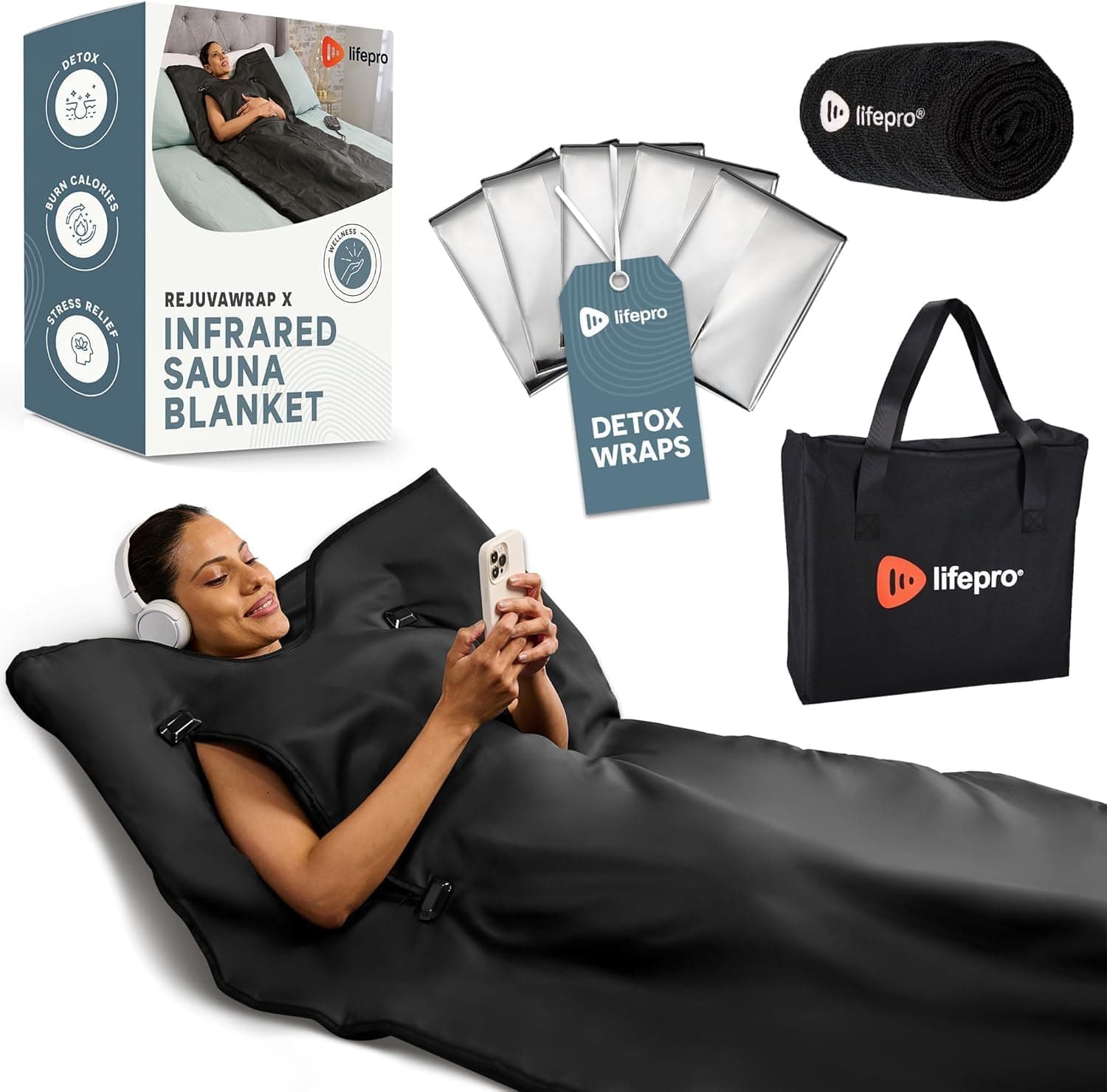
LifePro RejuvaWrap Sauna Blanket
The widest temperature range on the market (95 to 176 F), which matters when you want the flexibility to run cooler sleep-focused sessions and hotter sweat-focused sessions from the same unit. Accurate temperature maintenance across the range.
Reading Your Own Temperature Response
The actual core temperature you reach in a session depends on the blanket setting but also on session duration, your body composition, ambient room temperature, your hydration status, and your prior heat acclimation. Two users running the same blanket at 65 degrees Celsius for 45 minutes can end up with meaningfully different core temperature elevations.
If you have access to a reliable core temperature measurement method (e.g., a rectal or ingested thermometer for research purposes), the target range for the research-supported benefits is approximately 38.0 to 38.5 degrees Celsius. For most users this is impractical to measure.
Practical proxies: subjective "warm but not distressed" feeling, moderate but not dripping sweat, heart rate elevation to roughly 100-120 bpm, ability to breathe comfortably and carry on mental activity without feeling overwhelmed. If you are running at the blanket's high end and still feel modest thermal response, you may be a high-tolerance user who needs longer sessions to reach effective thermal dose. If you are running at the mid-range and feel distressed, you may be a lower-tolerance user who needs shorter duration or cooler temperatures.
Common Mistakes
Starting too hot. The desire to "push through" on the first session almost always produces a bad experience and long-term avoidance. Start conservative.
Running the same temperature for every goal. Sleep sessions, recovery sessions, and acclimation sessions have different optimal temperatures. Adjust to match.
Ignoring the feedback signals. If you feel distressed at a given temperature, it is too high for your current tolerance. Back off, do a few sessions cooler, and see if tolerance builds.
Assuming higher is always more effective. As discussed, returns diminish above 65 degrees Celsius for most wellness applications.
Confusing blanket display temperature with actual skin or core temperature. The blanket display shows the target setting; actual skin temperature depends on position, insulation, and ambient conditions. Treat the display as a guide, not an absolute.
The Temperature-Duration Tradeoff
Lower temperatures for longer durations can produce similar total thermal dose to higher temperatures for shorter durations. A 30 minute session at 65 degrees Celsius and a 45 minute session at 55 degrees Celsius produce roughly comparable core temperature elevations and cumulative effects.
For users who find high temperatures distressing, running a longer cooler session is a legitimate alternative that produces similar benefit. For users who want short efficient sessions, running shorter at the high end of your tolerance can work if your tolerance allows.
For heat acclimation specifically, longer-duration sessions at moderate temperatures appear to produce cleaner adaptation than shorter sessions at high temperatures.
The Bottom Line on Sauna Blanket Temperature
Most goals are optimally served by sessions in the 55 to 65 degrees Celsius range. Sleep-focused sessions sit at the lower end of that range. Performance and acclimation goals sit at the higher end. Heat-sensitive users should work at 45 to 55 degrees Celsius and may still derive substantial benefit.
Higher is not universally better, and the 65 to 80 degrees Celsius range is appropriate only for specific goals and experienced users. Individual variation in tolerance is substantial; your optimal temperature is determined by your experience, not by theoretical maximums or marketing.