Sauna Blanket for Anxiety and Stress Reduction - The Evidence and Protocol
Anxiety and chronic stress are two of the more common reasons readers try sauna blankets, and they are also two of the areas where the evidence is stronger than most people realize. The Janssen 2016 JAMA Psychiatry hyperthermia-for-depression study is a landmark that gets under-discussed in the sauna blanket marketing space. The mechanistic work on autonomic rebalancing, the HPA axis modulation, and the endorphin and dynorphin response during heat exposure all converge on a plausible and documentable anxiolytic effect. This article walks through what the research shows, what to realistically expect, the protocol with the best evidence base, and the important caveat that sauna blankets are not a replacement for treatment when clinical-grade anxiety or depression is present.
The Janssen 2016 Study - A Landmark Result
Janssen and colleagues (2016, JAMA Psychiatry; PubMed 27172277) conducted a randomized controlled trial of single-session whole-body hyperthermia (target core temperature 38.5 degrees Celsius) versus sham in 34 adults with major depressive disorder. The primary outcome was the Hamilton Depression Rating Scale, measured at multiple time points post-session.
The results were striking. A single 90-minute hyperthermia session produced an approximately 20 percent reduction in Hamilton scores at 1 week post-session, with the effect persisting (though attenuating) through 6 weeks. The effect size exceeded what most acute pharmacological interventions produce in similar time frames. The secondary outcomes - including subjective stress, fatigue, and anxiety components - moved in the same favorable direction.
This is not a sauna blanket study specifically, but the hyperthermia mechanism is the same. What a sauna blanket does to core temperature is well within the range Janssen tested. The extrapolation from a rigorous JAMA Psychiatry trial to at-home sauna blanket use for subclinical anxiety and stress is reasonable on mechanism and plausible on effect size.
The Autonomic Nervous System Mechanism
Chronic anxiety and stress states are characterized by sympathetic autonomic dominance - elevated baseline heart rate, reduced heart rate variability, narrowed parasympathetic reserve, and a cortisol pattern shifted toward afternoon-and-evening elevation. Many of the downstream symptoms of chronic stress (sleep disruption, elevated blood pressure, muscle tension, reduced recovery from exertion) ride on this autonomic imbalance.
Regular heat therapy appears to shift the autonomic balance back toward parasympathetic dominance over weeks of consistent use. The evidence for this comes from heart rate variability studies in sauna users (Laukkanen et al. and others), from cortisol rhythm work, and from subjective symptom reports across anxiety and stress populations.
The acute session effect also matters. During a session, sympathetic tone elevates (heart rate rises, norepinephrine increases). After the session, there is a substantial rebound toward parasympathetic dominance that can last 60 to 120 minutes. This post-session state is associated with subjective calm, reduced rumination, and in many users a noticeable reduction in generalized anxiety symptoms.
The HPA Axis and Endorphin Response
Heat exposure reliably increases beta-endorphin, dynorphin, and related endogenous opioid release. This contributes to the subjective post-session relaxation and mood improvement many users report. The effect is dose-dependent on session intensity and duration, with typical sauna blanket sessions at 55 to 65 degrees Celsius for 30 to 45 minutes producing measurable endorphin elevation.
The HPA axis response to repeated heat therapy is more nuanced. Acute sessions produce transient cortisol elevation as part of the stress response. Chronic regular use (multiple sessions per week over weeks) appears to attenuate the cortisol response and normalize the cortisol rhythm in people with dysregulated patterns. The literature here is thinner than on the autonomic nervous system, but the direction is consistent.
Anxiety Versus Stress - What Responds and What Does Not
The evidence and mechanism support meaningful improvement in what we might call subclinical or moderate anxiety: the generalized anxiety disorder presentation at the milder end, the stress reactivity that accompanies demanding jobs or life circumstances, the rumination and worry that does not rise to panic disorder severity, and the muscle tension and somatic anxiety symptoms.
Less responsive to heat therapy: panic disorder specifically (the acute panic episode is not going to be modulated by a session), obsessive-compulsive patterns (which have different mechanistic drivers), severe trauma-related anxiety (PTSD presentations often require specific trauma-focused treatment), and anxiety with prominent depersonalization or dissociation symptoms.
For chronic stress without clinical anxiety - the modern office-worker presentation of elevated baseline activation, muscle tension, sleep disruption, and reduced recovery - regular sauna blanket use is particularly well-suited. The stress reactivity reductions, sleep improvement, and autonomic rebalancing all target the dominant features of this presentation.
The Evidence-Based Protocol
For anxiety and stress reduction specifically, the protocol that reflects the strongest evidence is 30 to 45 minute sessions at 55 to 65 degrees Celsius, 3 to 5 times per week, sustained for at least 4 to 6 weeks before judging. The Janssen hyperthermia study used 90 minutes at higher intensity for single-session research purposes; for a home protocol, shorter and more frequent sessions are both more practical and likely to produce cumulative benefit.
Timing within the day matters less for anxiety than for sleep. Morning, midday, or early evening sessions all work. If sleep improvement is a secondary goal, evening sessions timed 90 to 120 minutes before bed are optimal. If you are using sauna blankets for stress reduction during a particularly demanding work period, lunchtime or immediately post-work sessions can provide a meaningful "reset" to carry through the afternoon and evening.
The behavioral practice around the session matters more for anxiety than for most other benefits. A quiet session environment (no phone, no email, minimal stimulus) allows the parasympathetic effect to develop fully. Slow breathing during the session - box breathing, 4-7-8 patterns, or simple extended exhalation - amplifies the parasympathetic shift. Many users find that combining sauna blanket sessions with meditation, audiobook listening, or simply lying in quiet solitude produces substantially more anxiety benefit than using the session as another input stream.

Best for Regular Low-Stakes Stress Practice
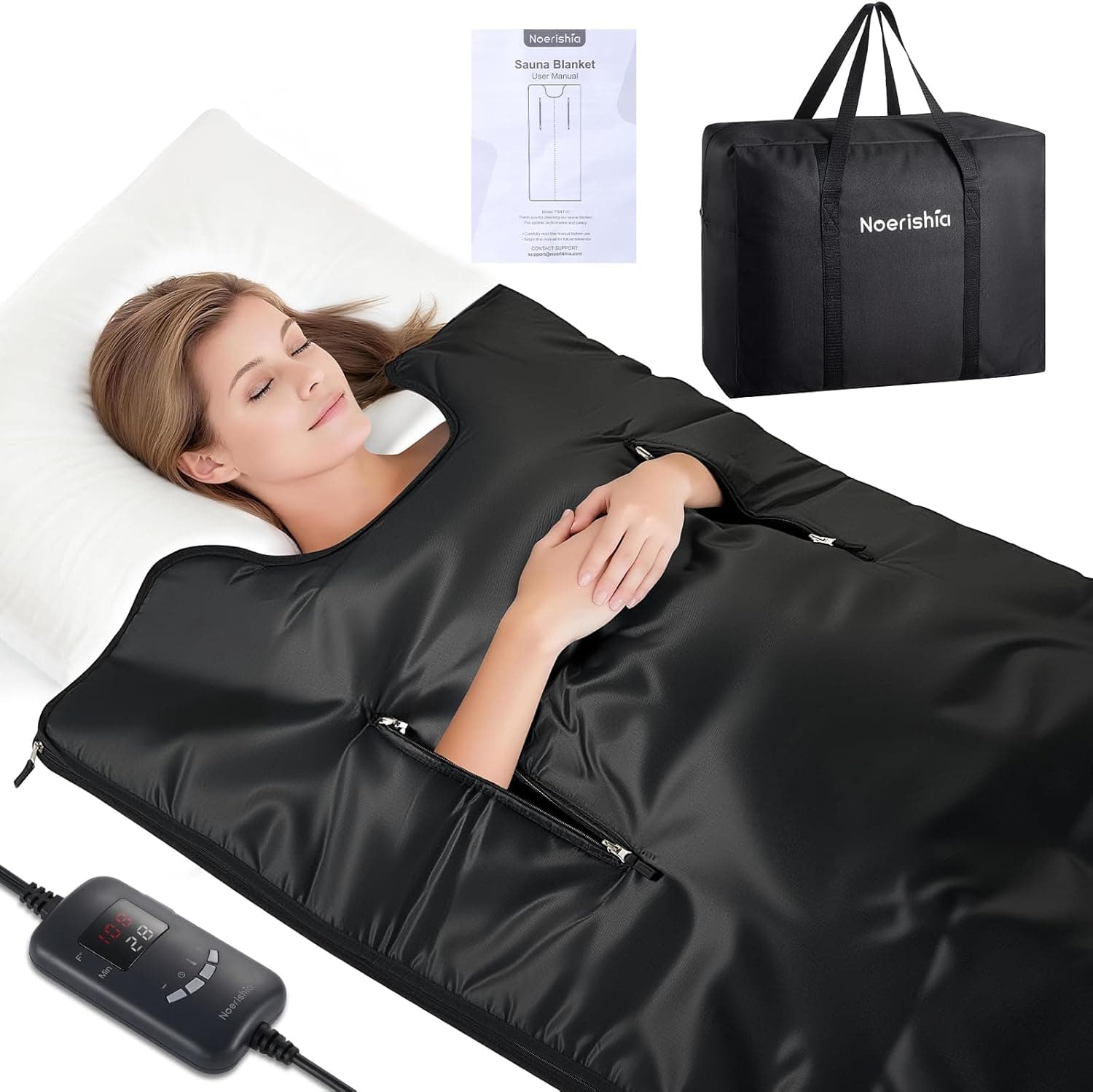
Noerishia Portable Sauna Blanket
For a 3-5x per week anxiety and stress protocol, accessibility matters more than premium features. Budget-friendly pricing, machine-washable interior (supports frequent use without hygiene compromise), and stable temperature control at the moderate levels the protocol uses.
What to Expect Over Weeks
The acute post-session calm is typically immediate and is the most reliable benefit. Within 30 minutes of finishing a session, most users describe a noticeable reduction in generalized anxiety or stress activation that persists for several hours. This is the endorphin and parasympathetic-rebound effect and it is consistent across individuals.
The chronic baseline improvement develops over weeks. Expect to notice reduced baseline tension, less reactive anxiety to everyday stressors, improved sleep, and gradually improved resilience to stressors that previously felt overwhelming. Heart rate variability improvements (if you track them) typically become measurable at 4 to 6 weeks of consistent use. Subjective mood and energy improvements often plateau around week 8.
The magnitude of benefit varies across individuals. Some users describe dramatic improvements that fundamentally change their relationship with stress. Others see modest but meaningful improvements. A minority see little benefit - which is consistent with any intervention in the anxiety and stress space and does not indicate that the intervention is useless, just that it is not a universal responder.
Stacking With Other Stress Interventions
Sauna blanket use combines well with essentially every evidence-based stress intervention. Exercise (ideally on separate days or as a morning practice paired with evening sauna use) addresses different mechanisms and produces additive benefit. Meditation practice layered into or alongside sauna sessions amplifies the parasympathetic effect. Sleep hygiene interventions work synergistically through the temperature-drop sleep mechanism. Breathwork during sessions is particularly high-yield.
Cognitive behavioral therapy, when indicated, is not replaced by heat therapy but is complemented by it. The physiological calming from regular sauna use can make it easier to engage with the cognitive work. Several therapists I have corresponded with report that clients using sauna blankets as an adjunct often progress more quickly through CBT protocols.
When Sauna Blankets Are Not the Right Intervention
For clinical-grade anxiety disorders (severe generalized anxiety disorder, panic disorder with frequent attacks, OCD, PTSD, severe social anxiety), sauna blanket use is an adjunct at most - not a primary treatment. The evidence base for first-line treatment of these conditions (CBT, medication, specific trauma-focused therapies) is overwhelmingly stronger than for heat therapy, and using a blanket in place of indicated treatment is the wrong prioritization.
For moderate-to-severe depression, the same caveat applies. The Janssen result shows that hyperthermia has an antidepressant effect, but it was tested in a controlled trial context with standardized parameters and patient selection. At-home use for clinically significant depression should not replace evidence-based treatment but can reasonably complement it under physician guidance.
Users with any acute anxiety episode (panic attack) during a session should immediately exit, cool down, and if the episode does not resolve quickly seek medical evaluation. Rarely, heat exposure combined with cardiovascular response can mimic or trigger panic-like symptoms in susceptible individuals. This is not a universal problem but does occur in a minority of users and is worth knowing about.
Medications and Mental Health Interactions
Most psychiatric medications do not have specific heat contraindications. SSRIs and SNRIs are generally tolerable with sauna use; some users notice increased post-session sweating on serotonergic medications, which is uncomfortable but not dangerous.
Tricyclic antidepressants have anticholinergic effects that reduce sweating and impair thermoregulation - start conservatively and monitor.
Benzodiazepines taken for anxiety do not interact specifically with heat therapy but amplify the post-session relaxation and mild sedation; standing up from the blanket too quickly while on benzodiazepines carries modestly higher fall risk.
Stimulants (used for ADHD or other indications) elevate baseline heart rate and can amplify the cardiovascular response to heat; shorter sessions at lower temperatures are prudent.
Lithium levels are sensitive to fluid balance - aggressive hydration is particularly important if you are on lithium and using a sauna blanket regularly.
The Bottom Line on Sauna Blankets for Anxiety and Stress
The evidence for heat therapy in anxiety, stress, and mood modulation is stronger than most users realize. The Janssen 2016 JAMA Psychiatry result on whole-body hyperthermia in depression is the cleanest single study in the space, and the autonomic and neurochemical mechanism work supports the clinical findings. For subclinical anxiety and chronic stress, regular sauna blanket use at moderate intensity over 4 to 8 weeks can produce meaningful, cumulative improvements in subjective anxiety, baseline tension, sleep quality, and stress resilience.
Use it as part of a comprehensive stress-management approach rather than as a standalone solution, respect the caveats around clinical-grade anxiety disorders, and give it enough time (at least 4 weeks of consistent use) before judging effectiveness.
References
- Janssen CW et al. Whole-body hyperthermia for the treatment of major depressive disorder - a randomized clinical trial. JAMA Psychiatry. 2016. PubMed 27172277
- Hanusch KU et al. Whole-body hyperthermia for the treatment of major depression. Am J Psychiatry. 2013. PubMed 23680939
- Hussain J, Cohen M. Clinical Effects of Regular Dry Sauna Bathing - Systematic Review. Evid Based Complement Alternat Med. 2018. PMC5941775
- Laukkanen T et al. Sauna bathing and all-cause mortality, cardiovascular death, sudden cardiac death and cancer. Mayo Clin Proc. 2018. PubMed 30290009
Related Reading
- Sauna Blanket for Sleep Quality
- Sauna Blanket for Chronic Fatigue and Long COVID
- Sauna Blanket and Menopause
Informational only. Clinical anxiety and depression require appropriate evaluation and treatment; heat therapy is an adjunct, not a substitute for evidence-based mental health care.