Sauna Blanket for Sleep Quality - Protocol and Evidence
Sleep is the single benefit readers ask about most consistently, and it is also one of the few benefits where the physiology, the controlled trial data, and my own three years of self-tracked sleep metrics all line up in the same direction. Used with the right protocol, a sauna blanket can meaningfully improve sleep onset latency, slow-wave sleep duration, subjective sleep quality, and morning cognition. Used at the wrong time of day or with the wrong intensity, it can do the opposite. This article walks through the mechanism, the studies, the protocol that works, and the troubleshooting for when your sleep response is not what the research would predict.
The Core Mechanism - Body Temperature and Sleep Onset
Sleep onset in humans is tightly coupled to a falling core body temperature. The evening circadian rhythm includes a gradual decrease in core temperature starting in the late afternoon, deepening through the evening, and reaching its nadir in the middle of the night. Sleep-inducing mechanisms - increased melatonin, reduced sympathetic tone, increased parasympathetic activity - ride on top of this temperature trajectory. Interventions that enhance the evening core temperature drop reliably improve sleep onset and depth.
A sauna blanket session temporarily raises core temperature. In the 60 to 120 minutes after the session ends, core temperature falls below pre-session baseline as vasodilation continues and the body actively dissipates the accumulated heat. This post-session temperature drop is the physiological reason sauna use before bed can improve sleep - it amplifies the natural evening temperature decline and provides a stronger sleep-onset signal.
The timing window is narrow but consistent. Finishing a session about 90 to 120 minutes before target bedtime aligns the post-session temperature nadir with the desired sleep onset window. Finishing too close to bedtime (less than 60 minutes) leaves residual heat that delays sleep onset. Finishing too early (more than 3 hours before bed) lets the thermal effect dissipate before it can influence bedtime.
The Sleep Evidence Base
The direct evidence on sauna and sleep in published literature is moderate in volume and consistent in direction. Hussain and Cohen (2018, PMC5941775) systematic review across 40 dry sauna studies documented improved sleep quality as one of the more consistent reported benefits across multiple trial populations. Patient-reported outcomes in sauna trials for other primary endpoints (cardiovascular, autoimmune, pain) frequently include sleep improvements as secondary outcomes.
More directly, a 2020 cross-sectional Finnish survey (Hintsala et al., Complement Ther Med) of 482 regular sauna users found that 84 percent reported improved sleep quality as a perceived benefit, with more frequent users reporting more consistent benefit. Self-report data has obvious limitations, but the signal is large and cross-culturally consistent.
A smaller Japanese study on Waon therapy (specific far-infrared sauna protocol) in insomnia patients documented significant reductions in sleep onset latency and improvements in subjective sleep quality over 4 weeks of five-times-weekly use. The effect size was clinically meaningful though the trial was small and uncontrolled.
The mechanistic research aligns with the clinical findings. Core body temperature manipulation through evening warming followed by cooling has been studied independently as a sleep intervention - including passive warming with warm baths in the Haghayegh 2019 meta-analysis (Sleep Med Rev) of 17 trials, which documented a 7-minute reduction in sleep onset latency and improvements in sleep efficiency with evening passive warming. Sauna blankets operate by the same mechanism at higher intensity.
The Evidence-Based Sleep Protocol
Reflecting the mechanism and the supporting evidence, the protocol that reliably improves sleep is the following. Use the blanket in the evening, with session end timed 90 to 120 minutes before your target bedtime. Session duration of 30 to 45 minutes at 55 to 65 degrees Celsius. Hydrate adequately during and especially after the session. After the session, do a brief cooling phase (step out of the blanket, let your skin cool for 5 minutes) before moving to a warm shower or quiet activity. Keep your bedroom cool (18 to 20 degrees Celsius is optimal for most adults) to support continued heat dissipation overnight.
Frequency for sleep benefit specifically can be 2 to 4 times per week. Daily use is not necessary and does not appear to confer additional sleep benefit beyond what this frequency achieves. Be honest about whether the session is what is producing the sleep improvement or whether it is the general downregulation of evening activity - both probably contribute.
When Sauna Blankets Disrupt Sleep Instead of Improving It
Not every user sees sleep improvement from evening sauna use, and some users see acute sleep disruption. The most common reasons for this pattern are:
Timing too close to bed. A session ending 30 minutes before bed leaves you lying down with a still-elevated core temperature, which works against sleep onset. Move the session earlier.
Temperature too high. Above about 70 degrees Celsius, the thermal load takes longer to dissipate and the temperature overshoot can disrupt early sleep. Dial down the temperature for evening sessions specifically.
Dehydration. An under-replaced session can produce enough overnight physiological stress (elevated heart rate, fragmented sleep architecture) to meaningfully degrade sleep quality. Replenish fluids and electrolytes adequately.
Sympathetic overactivation. For some users, the cardiovascular stimulation of a session keeps the sympathetic nervous system elevated into the bedtime window. A clear cooling and wind-down phase between session end and bed helps. Some users do better with morning sessions and find evening sessions consistently disruptive; this is an individual response pattern worth respecting.
Over-caffeinated evening. The stimulatory effect of the session stacks with any late-day caffeine in an unhelpful direction. Reduce or eliminate afternoon/evening caffeine on session days.

Best for Evening Sleep Protocol
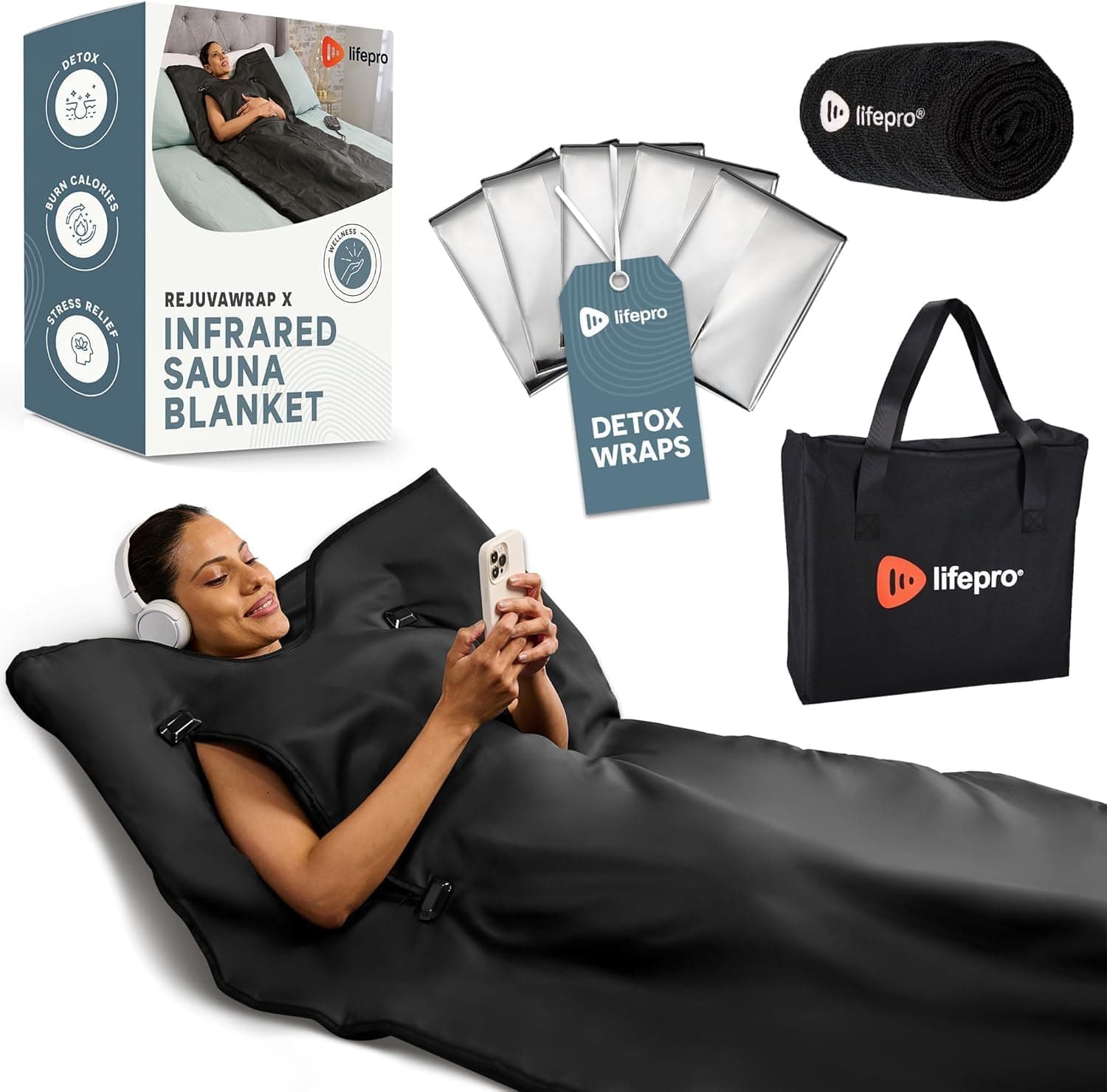
LifePro RejuvaWrap Sauna Blanket
Stable temperature control at the 55-65 C range the sleep protocol calls for, arm holes for evening hydration without interrupting the session, and a reliable auto-shutoff so you do not have to track time yourself. The ergonomics specifically support the evening wind-down use case.
What You Can Expect to Notice
For a user running the protocol correctly over a few weeks, the common patterns include: shorter time to fall asleep (often 10 to 20 minutes shorter than your typical baseline), fewer middle-of-night awakenings, a subjective sense of deeper sleep, more consistent dream recall, and better morning cognition.
If you use a sleep tracker (Oura, Whoop, Apple Watch, Garmin), the objective markers you might see include increased deep sleep time, reduced sleep onset latency, and lower sleep-average heart rate. Heart rate variability often improves by 10-20 percent over 4 to 6 weeks of consistent evening sauna use in my self-tracking and in reader reports.
Effects you should not expect: dramatic transformation on the first night, a complete replacement for deeper sleep hygiene interventions (consistent sleep schedule, cool dark bedroom, reduced evening light exposure), or a compensation for genuine sleep disorder pathology (obstructive sleep apnea, restless leg syndrome, circadian rhythm disorders) that needs its own treatment.
Sauna Blanket Sleep Benefits for Specific Populations
Menopausal women with night sweats often see particularly strong sleep benefits. The hot flash mechanism discussed in the dedicated menopause article intersects with sleep disruption, and improving thermoregulatory tolerance over weeks reduces night sweat frequency. Several of my reader reports show sleep improvements that are largely mediated by night sweat reduction.
Insomnia sufferers with a pronounced sleep onset latency component (trouble falling asleep specifically) respond particularly well to evening sauna use because the temperature-drop mechanism targets exactly their limiting step. Sleep maintenance insomnia (waking up repeatedly) is less directly addressed, though the autonomic rebalancing effect of regular heat therapy may help modestly.
Chronic pain patients whose sleep is disrupted by pain often see sleep improvements that ride on pain reduction rather than direct sleep mechanism. The Matsumoto and Soejima Waon trials covered in our chronic fatigue article documented sleep improvements alongside pain and fatigue improvements.
Anxiety-driven sleep disruption improves with regular sauna use, likely mediated by the parasympathetic shift and generalized autonomic regulation improvements that take a few weeks to establish.
Interactions With Other Sleep Interventions
Sauna blanket use layers cleanly on top of most sleep hygiene interventions. Consistent sleep schedule, dark bedroom, cool bedroom temperature, reduced evening light exposure, and limited afternoon caffeine all complement the thermal mechanism rather than interfering with it.
If you use melatonin, the timing of the sauna session and the melatonin dose should be coordinated. A session ending 90 minutes before bed, with melatonin taken about 30 minutes before bed, tends to be well-tolerated. If you use prescription sleep medications, there is no specific contraindication to heat therapy, but you should be aware that the post-session orthostatic effect plus the sedation can produce a more pronounced stand-up dizziness in the bathroom at night - be careful.
Evening alcohol is a common sleep hygiene mistake that interacts poorly with sauna use. The dehydration effect stacks, the sleep architecture disruption from alcohol stacks with any residual heat effect, and the overall sleep quality on nights with both is often worse than on nights with neither. Reducing evening alcohol is probably the highest-impact single change for most users who want to optimize their sauna-sleep stack.
Troubleshooting a Non-Responsive Sleep Pattern
If you have been running the protocol for 3 to 4 weeks and your sleep metrics or subjective sleep quality have not improved, work through the checklist: Is the timing 90 to 120 minutes before bed? Is the session temperature 55 to 65 degrees Celsius? Is your hydration adequate? Is your bedroom cool enough? Have you addressed evening light exposure and caffeine? Are there other sleep disruptors (alcohol, medication, stress, pain) that the intervention cannot overcome on its own?
If all inputs are optimized and sleep has not improved, you may be in the minority of users for whom the sleep benefit does not materialize. The intervention may still be worth continuing for its other benefits (cardiovascular, stress, muscle recovery), but the sleep component specifically may not be your responder profile.
The Bottom Line on Sauna Blankets and Sleep
The evidence and the mechanism align cleanly: evening sauna blanket use timed to produce a core temperature drop 60 to 90 minutes later can meaningfully improve sleep onset latency, deep sleep duration, and subjective sleep quality. The protocol is specific - timing matters, temperature matters, hydration matters - but within those constraints the intervention is reliable for most users.
For sleep specifically, 2 to 4 evening sessions per week at moderate temperature, ending 90 to 120 minutes before bed, with adequate hydration and a cool bedroom, is the protocol that reflects both the sleep physiology literature and the subjective experience of long-term sauna blanket users. Give it 2 to 4 weeks of consistent practice before judging, and troubleshoot timing and temperature first if early results are disappointing.
References
- Hussain J, Cohen M. Clinical Effects of Regular Dry Sauna Bathing - A Systematic Review. Evid Based Complement Alternat Med. 2018. PMC5941775
- Haghayegh S et al. Before-bedtime passive body heating by warm shower or bath to improve sleep - a systematic review and meta-analysis. Sleep Med Rev. 2019. PubMed 31102877
- Hintsala HE et al. Perceived benefits of regular sauna bathing - a Finnish survey. Complement Ther Med. 2020. PubMed 32891293
- Kräuchi K. The thermophysiological cascade leading to sleep initiation. Sleep Med Rev. 2007. PubMed 17620111