Sauna Blanket Before or After Workout - The Timing Guide Based on the Research
The question of whether to use a sauna blanket before or after a workout is one of those that sounds simple until you look at the evidence. The honest answer is that the timing depends on what you are actually trying to accomplish. Pre-workout heat exposure, post-workout heat exposure, and heat exposure on separate days all have distinct physiological effects and distinct applications. The strongest-evidence outcomes - cardiovascular adaptation, endurance performance, muscle recovery, and hypertrophy - each have a preferred timing that is not identical. This article walks through the science, the trial protocols that have worked, and the specific recommendation for each common goal.
The Core Physiological Effects at Each Timing
Pre-workout sauna exposure (a session ending 30 to 120 minutes before a workout) raises core temperature, increases cardiovascular baseline, produces partial heat acclimation over weeks of repeated exposure, and can produce a mild fluid deficit entering the workout. The acute effect is a warmer, more cardiovascularly primed starting state for the workout; the chronic effect after weeks is improved heat tolerance and modest endurance benefit.
Post-workout sauna exposure (a session starting within 30 minutes to 2 hours after a workout) adds heat stress on top of the exercise stress, amplifying heat shock protein induction, enhancing post-exercise hypotensive effects, supporting parasympathetic recovery, and, in the specific protocol tested in the Gayda 2012 trial, producing measurably larger 24-hour blood pressure reductions than sauna alone. The acute effect is a stronger recovery signal; the chronic effect is amplified cardiovascular adaptation.
Separate-day sauna (no workout on the same day) produces the cleanest isolation of heat therapy effects without the interaction with exercise stress. This is the pattern that appears in the Finnish cohort data where sauna and exercise benefits are additive rather than interactive.
The Evidence for Pre-Workout Heat Exposure
Heat acclimation has been studied extensively in athletic populations. The classic protocol involves 10 to 14 consecutive days of heat exposure for 60 to 90 minutes per day, producing sustained improvements in heat tolerance, plasma volume expansion (a 5 to 10 percent increase is typical), lower core temperature at a given workload, lower heart rate at a given workload, and modest VO2 max improvements of 2 to 5 percent.
The Scoon et al. (2007) and Lorenzo et al. (2010) studies documented that 10 days of heat acclimation (passive heat exposure or post-exercise heat exposure) produced meaningful endurance performance improvements in trained athletes even when competing in cool environments. The mechanism is the plasma volume expansion and improved thermoregulatory efficiency that carry over to non-heated performance.
For at-home sauna blanket use to produce heat acclimation, the protocol that matches the research is 30 to 40 minute sessions at 55 to 65 degrees Celsius, 5 to 7 days per week, for 2 to 3 weeks. This is the block you run before a target event or as a cyclical acclimation period a few times per year. Once acclimated, a maintenance protocol of 2 to 3 sessions per week preserves most of the benefit.
Pre-workout single-session use (one session immediately before a specific workout) has less evidence support. The acute cardiovascular priming can help for short-duration, moderate-intensity sessions, but it can also produce premature fatigue in long-duration or high-intensity sessions by starting the workout with a cardiovascular and fluid debt.
The Evidence for Post-Workout Heat Exposure
Gayda and colleagues (2012, PMC8108777) compared sauna alone, exercise alone, and exercise followed by sauna in 16 untreated hypertensive patients. The exercise-plus-sauna condition produced significantly larger reductions in 24-hour and daytime systolic blood pressure than either intervention alone. This is the clearest single result supporting post-workout timing for cardiovascular benefit.
Kakamu et al. (2022) examined post-exercise sauna in amateur athletes and documented improved heart rate variability recovery compared to exercise alone, suggesting the post-workout timing supports parasympathetic recovery more effectively than sauna on a separate day.
Stacey et al. (2018) found that post-resistance-exercise heat exposure amplified heat shock protein 70 expression in muscle biopsy samples, suggesting the stacked exercise-and-heat stress produces a stronger hormetic signal than either stressor alone.
The downside of post-workout sauna is the dehydration stack. Exercise produces fluid and electrolyte losses; adding a sauna session on top doubles down on that loss and requires aggressive fluid replacement. For athletes with high training volumes, managing the cumulative fluid balance becomes the rate-limiting consideration.
What Specific Goals Point to Which Timing
Cardiovascular adaptation (blood pressure, VO2 max, cardiovascular risk reduction): Post-workout sauna, 3 to 5 times per week, is the best-supported timing based on the Gayda data and the heat acclimation literature.
Heat tolerance for a warm-climate event (marathon in heat, summer competition, military selection): Daily sauna sessions for 2 to 3 weeks pre-event, using separate-day or post-workout timing. The classic heat acclimation protocol.
Endurance performance improvement in cool conditions: 10 to 14 day heat acclimation block using post-workout sauna, then 2 to 3 maintenance sessions per week.
Muscle recovery (DOMS reduction, subjective recovery): Post-workout sauna, typically 30 to 45 minutes starting within 1 to 2 hours of the session end. The evidence here is more subjective than objective but consistent across reports.
Hypertrophy support: The evidence is less clear. Post-workout sauna does upregulate heat shock proteins and improve muscle recovery markers, but the net effect on training adaptation and hypertrophy has not been cleanly demonstrated. Use as a recovery tool rather than a hypertrophy driver.
Cardiovascular conditioning for sedentary or deconditioned individuals: Sauna alone on non-exercise days is well-supported by the Finnish cohort data. Separate-day timing lets the sauna stimulus do its cardiovascular work without being confounded with exercise stress that the user may not be ready for.
General stress reduction and sleep improvement: Evening sauna on non-workout evenings or separated by several hours from a morning workout. Timing considerations from the sleep and anxiety articles apply here.
The Acute Pre-Workout Warning
A session immediately before a high-intensity workout (within 30 minutes) is generally a poor idea. You start the workout with an elevated baseline cardiovascular state, a partial fluid deficit, and often a subjective sense of fatigue that is actually thermal rather than metabolic. Performance in high-intensity work is usually compromised. Perceived exertion is higher than expected for the workload.
If you want to use sauna and exercise on the same day and your constraint is time, the post-workout direction is better supported by the evidence. If you must do pre-workout for some reason, buffer the session end by at least 60 to 90 minutes before the workout starts and hydrate aggressively in the interval.
The Recovery-Optimized Protocol for Serious Trainers
For an athlete or serious recreational trainer who wants to integrate sauna blanket use with a 4 to 6 days per week training schedule, the protocol I have seen work best is approximately as follows.
Training days with high-intensity or long sessions (interval work, long runs, heavy lifting): post-workout sauna 30 to 45 minutes, starting 60 to 90 minutes after the end of training to allow initial recovery and rehydration before adding the heat stressor. Focus on aggressive fluid and electrolyte replacement.
Training days with moderate sessions (aerobic base work, moderate lifting): post-workout sauna is optional and can be shorter (20 to 30 minutes) or deferred to evening.
Easy or recovery days: sauna blanket is an excellent stand-alone use. Morning or evening depending on sleep goals. 30 to 45 minutes at moderate temperature.
Competition or hard-effort weeks: reduce sauna exposure volume to preserve recovery capacity. The sauna is an additional stressor, and in peak weeks the balance shifts toward minimizing total stress.

Best for Post-Workout Athletic Use
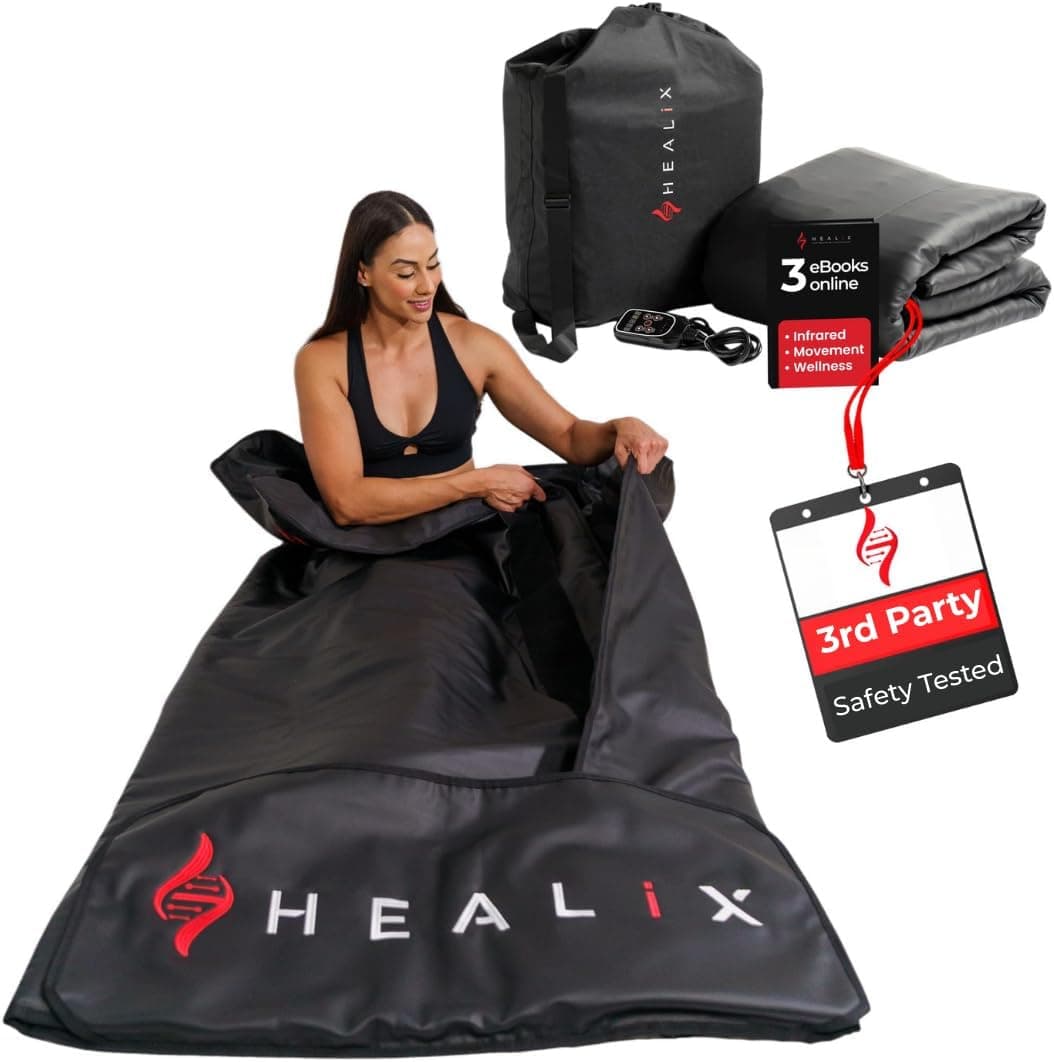
LifePro RejuvaWrap Sauna Blanket
High upper-temperature range (up to 176 F), arm holes for during-session hydration which matters more after a heavy workout, and comfortable extended duration use. The setup I recommend for athletes running a 5x/week training schedule with sauna integrated into recovery.
The Heat Acclimation Block - How to Run It
For the pre-event heat acclimation protocol specifically, the classic research-backed approach is:
Days 1-3: 20 to 30 minute sessions at 55 to 60 degrees Celsius. Your body is adjusting; do not push for longer sessions yet.
Days 4-7: 40 minute sessions at 60 to 65 degrees Celsius.
Days 8-14: 60 minute sessions at 60 to 65 degrees Celsius.
Throughout: daily, ideally in the 2 to 4 hour window post-workout. Aggressive hydration with electrolyte replacement. Morning weigh-in to catch cumulative fluid deficit early.
After day 14, run your event or transition to maintenance. The plasma volume expansion and heat tolerance adaptation persist for 2 to 4 weeks without maintenance and can be preserved with 2 to 3 sessions per week beyond that.
Interference Effects to Watch For
There is some evidence that very high heat exposure immediately after high-intensity resistance training may blunt the molecular signaling associated with hypertrophy adaptation (specifically mTOR pathway activity). The evidence here is mechanistic and limited to specific experimental conditions; the practical impact on real-world hypertrophy is unclear.
To be conservative, if your primary training goal is hypertrophy, a 2 to 3 hour delay between the end of the resistance training session and the start of the sauna session is probably prudent. If your primary training goal is endurance or cardiovascular adaptation, this consideration matters much less.
The Hydration Stack - Non-Negotiable for Athletic Use
Athletes with high training volumes need to take hydration management more seriously than recreational sauna users. A hard training session can produce 1 to 2 liters of sweat. Stacking a sauna session on top of that adds another 500 to 1200 milliliters. If your total daily fluid replacement is inadequate, the cumulative deficit compromises recovery and training adaptation across weeks.
The working athlete's protocol: pre-workout hydration with electrolytes, during-workout fluid intake matching sweat rate where practical, immediate post-workout aggressive rehydration before the sauna session, during-session water intake (with electrolytes on heavy sweat days), and continued electrolyte-containing fluids for 2 to 3 hours post-session. Daily body weight in the morning as an integrative marker of fluid status.
Specific Sports and the Best Fit
Endurance runners, cyclists, and triathletes have the clearest benefit case from heat acclimation protocols. Pre-event heat acclimation blocks (especially for warm-climate races) and regular post-workout sauna use are well-supported.
Strength and power athletes benefit more from the recovery and sleep effects than from performance enhancement. Timing to avoid the 2-hour post-resistance-training window is prudent.
Mixed-sport athletes (CrossFit, martial arts, team sports) benefit from general recovery and cardiovascular adaptation effects. Post-workout timing works for most sessions.
Recreational trainers without specific performance goals can use whatever timing fits their schedule and gives them the best subjective benefit.
The Bottom Line on Sauna Blanket Workout Timing
For cardiovascular and general recovery goals, post-workout sauna timing has the best evidence base, most notably from the Gayda 2012 trial. For endurance performance and heat acclimation specifically, a daily protocol over 10 to 14 days is the classic approach. For muscle recovery and subjective well-being, post-workout timing is widely preferred. For hypertrophy focus, delay of 2 to 3 hours post-resistance-training is conservative but probably worthwhile. For general wellness use without specific performance goals, timing is flexible and any consistent pattern works.
Avoid the high-intensity-pre-workout pattern. Manage hydration aggressively in any athletic application. Reduce volume during peak competition weeks. These simple rules handle the large majority of timing questions reasonably well.
References
- Gayda M et al. Effects of Sauna Alone and Postexercise Sauna Baths on Blood Pressure. J Clin Hypertens. 2012. PMC8108777
- Lorenzo S et al. Heat acclimation improves exercise performance. J Appl Physiol. 2010. PubMed 20724557
- Scoon GS et al. Effect of post-exercise sauna bathing on the endurance performance of competitive male runners. J Sci Med Sport. 2007. PubMed 16877041
- Stacey BS et al. Post-exercise heat exposure and HSP70 expression. Exp Physiol. 2018. PubMed